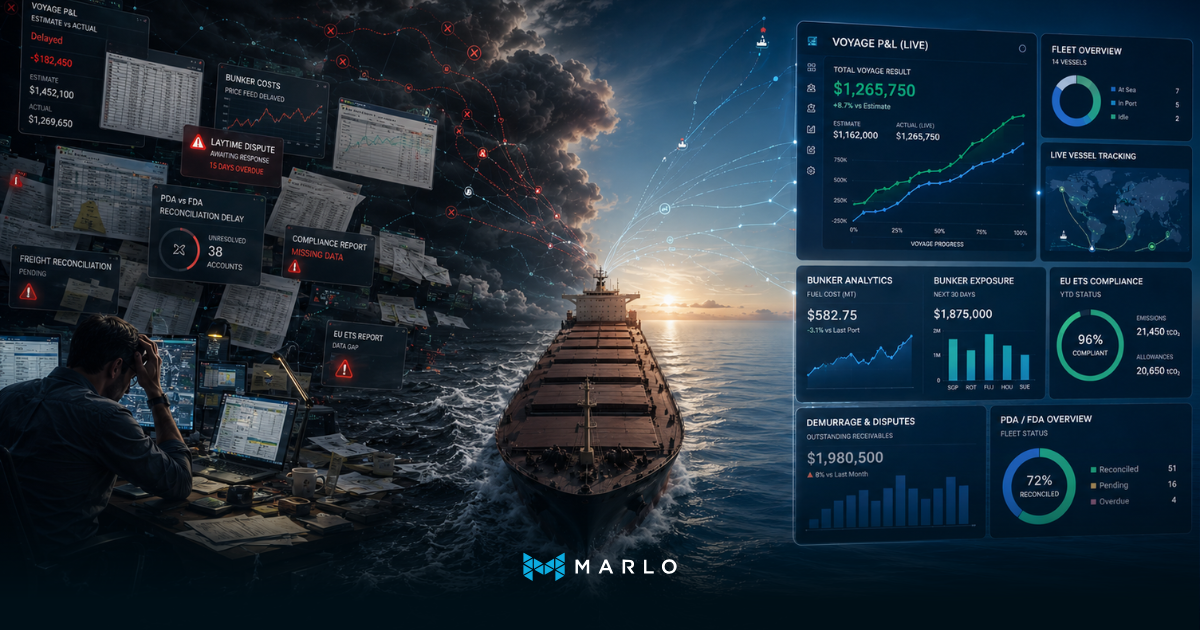
Maritime ERP software is a category of business management platform designed specifically for shipping companies. Unlike general-purpose ERP systems such as SAP or Oracle, maritime ERP is built around the operational and financial workflows that are unique to vessel ownership and operation: voyage planning, freight invoicing, laytime calculations, bunker procurement, multi-currency accounting, and regulatory compliance.
For mid-size shipping companies managing fleets of 5 to 40 vessels, choosing the right maritime ERP is one of the most consequential technology decisions the business will make.
What Maritime ERP Software Includes
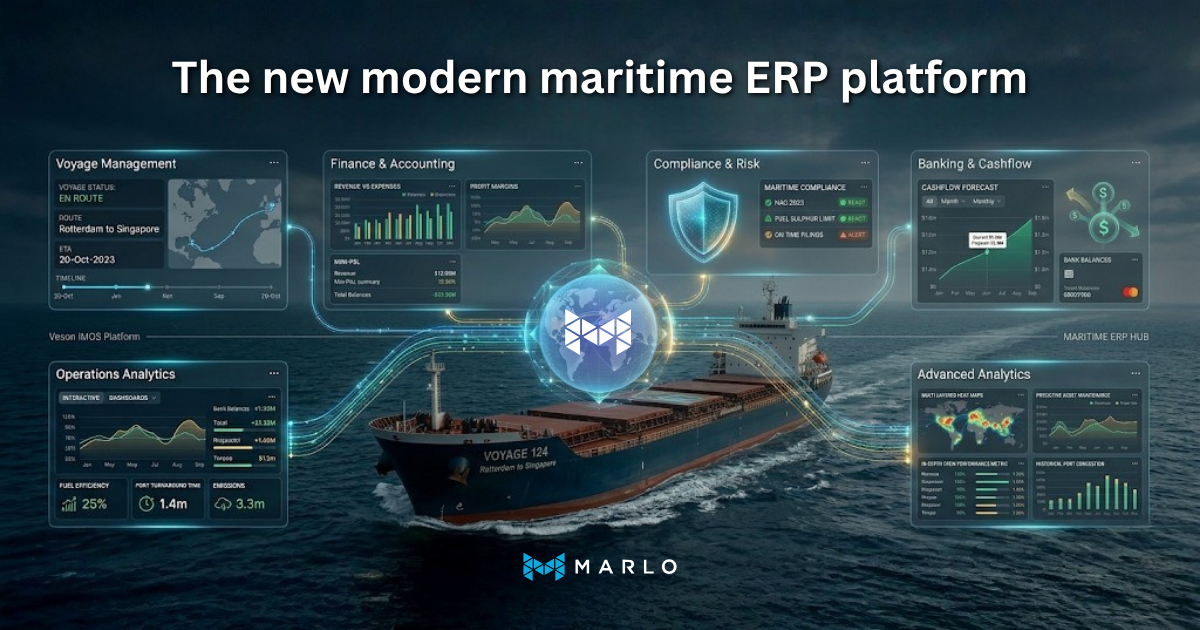
A complete maritime ERP platform covers the following functional areas:
Voyage Management. The operational core of any maritime platform. This includes voyage estimation, fixture and chartering management, voyage operations tracking, laytime and demurrage calculation, bunker management, and berth scheduling.
Finance and Accounting. Voyage P&L tracking, general ledger integration, accruals, month-end closing, cashflow forecasting, multi-currency accounting, and accounting software sync. For mid-size companies, this typically means native integration with Xero or QuickBooks.
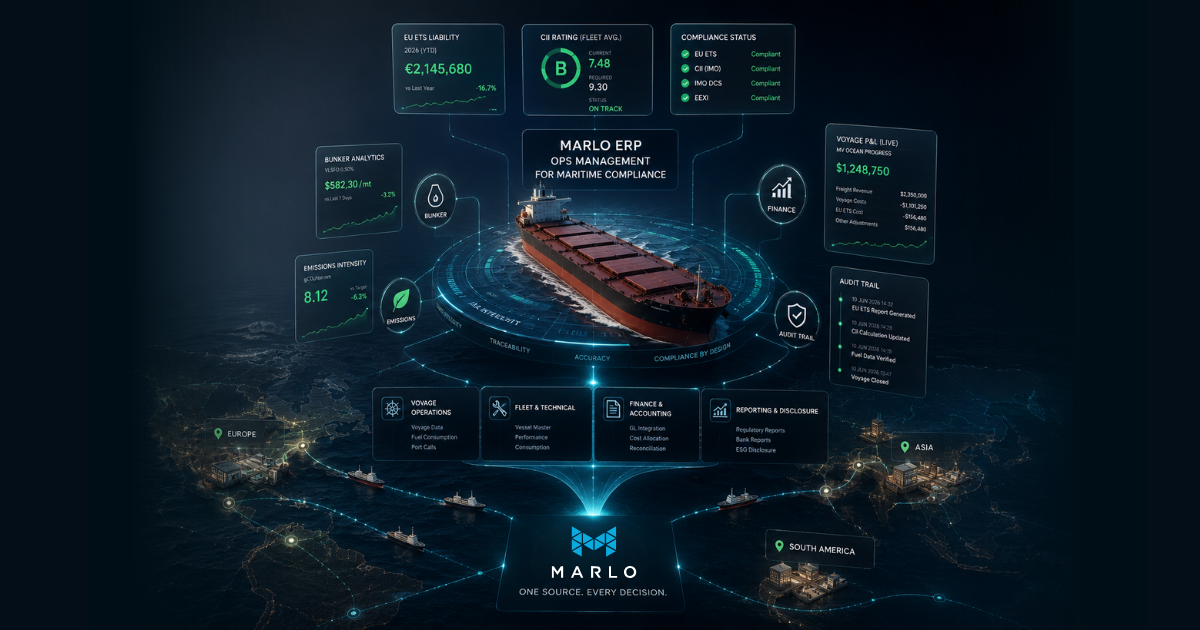
Compliance. Sanctions screening against global watchlists, CII monitoring (Carbon Intensity Indicator), and EU ETS emissions tracking. In 2025 and beyond, these are baseline requirements for any company operating in international waters.
Banking and Payments. Business banking, FX transfers, corporate cards, and payment reconciliation. Not all maritime platforms include banking natively. Platforms that do eliminate the need for separate banking relationships and manual reconciliation between systems.
Loan and Covenant Management. Tracking vessel loans, monitoring covenant thresholds, and connecting debt obligations to operational performance. Critical for companies with ship mortgage financing.
Analytics and Dashboards. Real-time visibility into fleet performance, voyage P&L, cashflow status, counterparty credit scores, and vessel valuations.
Maritime ERP vs. Single-Function Voyage Management Software
Not all maritime software qualifies as an ERP. Many voyage management systems (VMS) handle chartering and operations but do not include finance, compliance, or banking. The distinction matters because the gaps become operational problems.
A company running a voyage management system alongside a separate accounting tool, a compliance tool, and a banking relationship is managing four systems. Data moves between them through manual exports, spreadsheets, and email. Every handoff introduces delay and error risk.
Maritime ERP consolidates those functions. The operational data that drives a voyage also drives the financial projection, the compliance check, and the accounting entry. There is one source of truth.
What Mid-Size Shipping Companies Should Look For
When evaluating maritime ERP platforms, mid-size companies should assess the following criteria:
- Scope included at the base price. Is voyage management, finance, and compliance included in one plan, or is each function an add-on module?
-
- Accounting software compatibility. Does the platform sync with Xero or QuickBooks natively, or does integration require a custom project?
-
- Native compliance. Are sanctions screening, CII monitoring, and EU ETS tracking built in, or are they third-party tools?
-
- Banking integration. Does the platform connect to your banking operations, or do you manage money separately?
-
- Implementation time. Can the platform be deployed in weeks, or does it require a months-long implementation engagement?
-
- Transparent pricing. Is pricing published and predictable, or does it require a sales negotiation?
-
- Trial availability. Can you test the platform before committing?
-
Marlo: Maritime ERP Built for Mid-Size Shipping Companies
Marlo is a unified maritime ERP platform built for shipping companies operating between 5 and 40 vessels. It combines voyage management, finance, banking, compliance, and analytics in a single system, with native Xero and QuickBooks sync, built-in sanctions screening, CII monitoring, and EU ETS tracking.
Pricing starts at £500 per month with a 7-day free trial available at marlo.co. No implementation project is required to get started.
Explore the platform at marlo.co

-1.png) Alex
Alex
-1.png?width=30&name=Untitled%20design%20(98)-1.png) Alex: Jun 19, 2026
Alex: Jun 19, 2026